
 RSS Feed
In a shifting real estate market, the guidance and expertise that Inman imparts are never more valuable. Whether at our events, or with our daily news coverage and how-to journalism, we're here to help you build your business, adopt the right tools — and make money. Join us in person in Las Vegas at Connect, and utilize your Select subscription for all the information you need to make the right decisions. When the waters get choppy, trust Inman to help you navigate.
For blockchain technology to gain widespread adoption in an industry as large as real estate, a lot has to play out first.
The prices of blockchain assets are crashing, the processes remain complex, and the U.S. government is eyeing new regulations of — and even its own alternatives to — the existing slate of private cryptocurrencies.
But some real estate professionals believe the fall of a variety of private tokens may only speed up the process of finding the winning products that could revolutionize the home transaction.
Teresa Grobecker of Grobecker Holland International and Kevin Cottrell of eXp Realty will join a panel at Inman Connect Las Vegas in August to discuss their firm Real Estate Consortia and its work to standardize the role of the blockchain in home transactions.


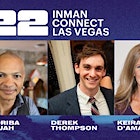

These two and their colleague Sheila Fejeran of eXp — all real estate practitioners and executives at Consortia — joined Inman on a video call in advance of the conference. Their responses below have been edited for length and clarity.
But first, because this is a confusing and quickly evolving space, let's cover a few terms.
- Blockchain — A blockchain is a shared record of something, distributed across a large number of computer servers. Because the process is decentralized, it's difficult for an outside actor to change the record, such as by hacking into a single computer server. There are multiple applications of blockchain technology, including the popular assets of cryptocurrency and NFTs. But these are not the technology's only uses.
- Nonfungible token — An NFT is a unique digital token that exists on the blockchain. It can be made to represent a real-world or digital asset, and can be bought and sold. Some real estate properties have been bought and sold through an LLC tied to a specific NFT. In these cases, when the NFT changes hands, so does ownership of the LLC, and the property.
- Stablecoin — Similar to a money market fund, these crypto assets are designed to allow users to transact for cryptocurrencies. Most stablecoins are pegged to the value of the U.S. dollar, meaning one stablecoin should always be worth one dollar. But federal regulators have started to inquire about whether stablecoins are backed by sufficient reserves to protect their investors. In recent weeks, the largest stablecoin — Tether — has been trading for a fraction of a cent less than the dollar. And a smaller one — Terra — collapsed altogether.
- 'Fedcoin' — This slang term originated in the crypto community, and refers to U.S. government efforts to explore creating its own digital currency. In March, President Joe Biden signed an executive order that asked the government to place "urgency" on research and development of a possible Central Bank Digital Currency. While it's not yet approved, this move is viewed by some crypto enthusiasts as a threat to Bitcoin and other private blockchain assets.




Now, on to Inman's conversation with Consortia.
Inman: In January at Inman Connect New York, Teresa said that replacing intermediaries — such as real estate agents — is one of the explicit goals of many blockchain enthusiasts. What role might Consortia play in keeping the agent at the center of a blockchain-assisted transaction?
Grobecker: This was my promise to the industry in 2018, jumping off into the national stage. I had no idea what I was getting myself into. I didn't even know Inman and all these things existed. I knew the publication, but events — I knew nothing about anything about this space. At the [Real Estate Standards Organization] stage in 2018, I said the promise was to keep the Realtor at the center of this. So when we mint a property nonfungible token, there has to be a practitioner who is the steward to whoever is coming onto the system, to tie that property to the right person. The reason being is, it's a relationship-built conversation.
Cottrell: If you look at history, we went through this the first time with the Internet, where people thought that what Expedia did to travel agents was going to happen with real estate agents. And it didn't, because what people realized is, clients want representation. So just introducing blockchain into it doesn't obviate the need for relationships, as Teresa just described. In the Web3 world, or decentralized world, they like to just wipe it clean, and that's just not practical. The expectation is, the efficiency of blockchain will be able to take advantage of what Consortia provides. And if anything we can drive costs out of the transaction, and make it much more efficient, but it doesn't break that linkage [between parties]. We can provide the private blockchain to all of the parties, and still have the public-facing portions that are needed, and do it in a way that you're going to see big adoption in the real estate ecosystem.
Read Next









One use of the blockchain you've mentioned is hosting a public database of home listings and transactions. Are you describing a competitor of MLSs? And how far are we from seeing it come about?
Grobecker: There is no intention to disrupt the MLS world. I think even when we first launched, there was a lot of fear. I've been asked this question for the last four years since joining organized real estate. People see a platform where data is shared and the most akin thing we can analogize that onto is MLS. The MLS, I say, is the backbone of financial markets, and at a global scale. The reason why American real estate is so stable is because of the way that the data is collected and stored in the MLS. Consortia has no interest in replicating that system. People have come to me from the MLS world, and they have said, "Teresa, consult us on how we would rebuild this on blockchain." It is inefficient, at best. The other side of it is the sales and servicing side of the MLS. We have no intention of going there, so that said, Consortia supplements the kind of data that is available in the housing market, and it puts it in one place.
Fejeran: As she was describing, Consortia is not meant to take over the MLS, or take over the Realtors, or take over any part of the industry. Consortia is to help be a store of data in a more efficient, effective, consistent way of correct information that all parties getting involved in the information will know it's true, verified, appropriate, privately held what is appropriate, publicly facing what is appropriate.
How much of Consortia's business is as a store of data vs. as an educational resource for agents and others about the blockchain?
Grobecker: Blockchain as a technology enables so many doors to open, and all of a sudden we as practitioners are now dealing with things that have never been on our radar before. So we now have to understand the convergence of SEC laws. We have to know the U.S. Treasury Department financial crimes, their department. That touches on anti-money-laundering laws, and know-your-customer rules. Now we have to say, here's someone's crypto wallet. Oh, by the way, where's this money coming from? Is it coming from the dark web, and the Silk Road? Or is this legitimate funds from someone's legitimate wallet? We have to know, are we selling real estate now, or are we selling an SEC-regulated security? For me as a practitioner, especially as a broker, it's understanding the convergence of all these laws. I just want to make sure that all my friends stay out of orange jumpsuits. It's really important that they're all like, "OK, these are the laws — here's how I stay in my lane and I don't get in trouble."
In recent months, prices of most crypto assets, including NFTs, have undergone a steep decline. Do you think this will affect the timeline for the further adoption of blockchain technology in real estate? Do you think it sets it back?
Grobecker: Forward, actually, and at a rapid clip. And the idea here is that crypto is merely a testing ground for a Fedcoin that's going to be rolled out. And when this project started, that was very conspiracy theory-esque. But the government has since announced that they're working on Fedcoin. Moreover, in the last couple months, the SEC said they were going to regulate stablecoins. They were going to investigate them, right? And immediately thereafter, stablecoins start to crash. From there, everything starts unwinding, as far as the validity of crypto. And this is actually a beautiful thing. The SEC and the federal government really cracking down is good for the consumer. Them flushing this out is good for the consumer. It's also heartening, what will become Fedcoin, and what will become the one or two winners in the actual stablecoin space. So I think everything just moves faster from here in a legitimate, legal way.
Cottrell: I think there's a lot of confusion where people want to equate blockchain with crypto. And that's becoming clear that blockchain is the infrastructure. It's the ledger, if you will; it's immutable. That is going to be the infrastructure that moves forward. We may lose 90 percent of the crypto projects. It should remind you of 1999. Over 1999 and 2001, so much went away [in the internet infrastructure]. I expect the same thing's going to happen to crypto.
Inman Connect Las Vegas kicks off in a little over a month here. Can you give our readers a sneak peak of what you plan to discuss on stage?
Grobecker: As a follow-on to the previous question, probably something that's important to say is the second that Fedcoin or stablecoin, those winners are revealed, 100 percent, all our transactions are on blockchain. So it doesn't matter if you like blockchain, if you hate it — that's really irrelevant. It's a matter of, are you ready for it? We as practitioners need to be ready. We need to adapt. We need to educate ourselves, and then be there to service our customers.
Cottrell: There's a dearth of understanding of the regulatory framework, especially around real estate. There's a lot of frothy conversations around fractionalization, NFT home sales, and all that. So we're going to also touch on that so people understand where we expect the marketplace to go.
Fejeran: The interesting thing is that [a number of influential agents I work with] are hungry for this. They don't understand it, but they're hungry for it. And they're hungry for a new application that Consortia's going to be doing — to sneak peak on the metaverse, since you mentioned it — just something that we're going to be integrating. We're not going to go into it yet. But just keep your ears out. That's coming in the future.
ARTICLE BELONGS TO INMANNEWS.COM