
Posts from March 2023

Sunshine Properties Blog

Subscribe and receive email notifications of new blog posts.


rss logo RSS Feed
Uncategorized | 818 Posts
March
1

Current Mortgage Rates for March 1, 2023: Rates Climb

Some important mortgage rates moved up over the last seven days, though not as fast as last week. The Fed's interest rate hikes have increased costs for homebuyers.

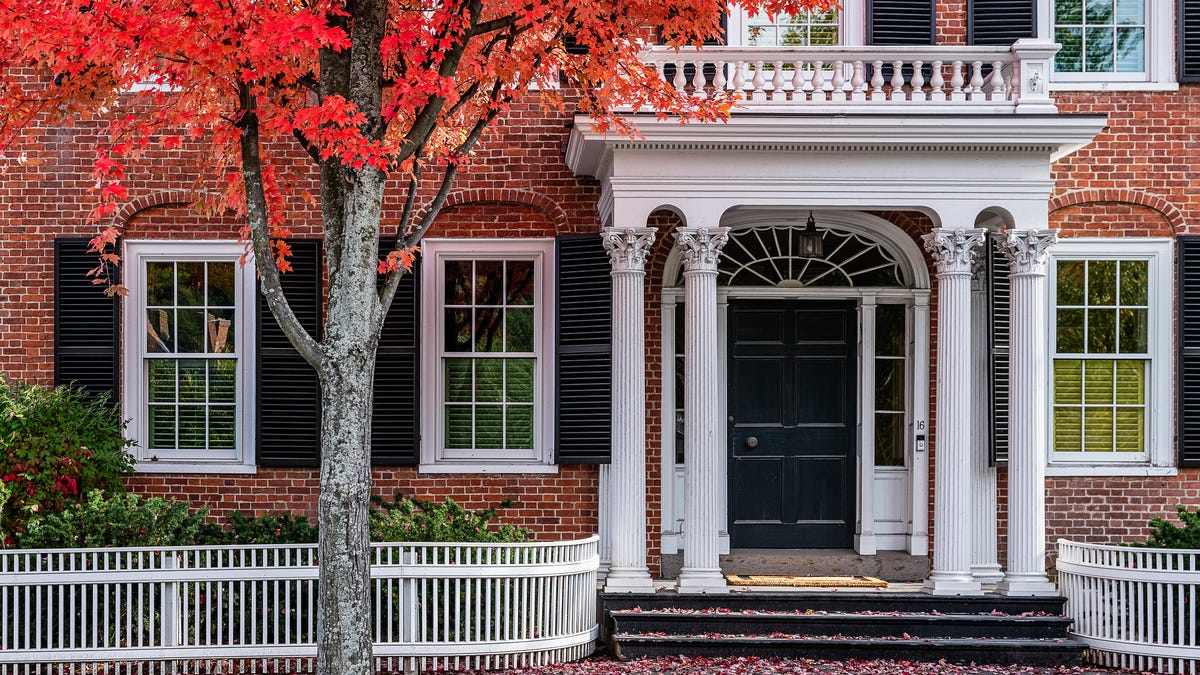
Brick house with white columns and a fall tree with bright leaves in front
John Greim/Getty Images

Some closely followed mortgage rates moved up over the last seven days. The average 15-year fixed and 30-year fixed mortgage rates both grew, albeit at a slower rate than we saw last week. For variable rates, the 5/1 adjustable-rate mortgage also climbed.

After nearly a year of rising mortgage rates, borrowers finally saw some relief late last year. Rates have declined since they hit their peak in late 2022, though current rates remain nearly double what they were during the record-low rate environment of the pandemic.

Inflation, and the series of rate hikes the Federal Reserve implemented in 2022 in an attempt to curb it, contributed in part to the rise in mortgage rates. Mortgage rates hit a 20-year high in late 2022, but now the macroeconomic environment is changing again.

Overall inflation remains high but has been slowly but consistently falling every month since it peaked in June 2022. The Fed's decision to raise the federal funds rate by 0.25% on Feb. 1 after its latest meeting -- the smallest increase since March 2022 -- suggests that inflation may be cooling and the central bank may be able to ease up on its rate hikes.

What does this mean for homebuyers this year? Mortgage rates are likely to decrease slightly in 2023, although they're highly unlikely to return to the rock-bottom levels of 2020 and 2021. However, rate volatility may continue for some time. "Expect mortgage rates to yo-yo up and down in the first half of the year, at least until there is a consensus about when the Fed will conclude raising interest rates," says Greg McBride, CFA and chief financial analyst at Bankrate. (Like CNET Money, Bankrate is owned by Red Ventures.) McBride expects rates to fall more consistently as the year progresses. "Thirty-year fixed mortgage rates will end the year near 5.25%," he predicts.

Rather than worrying about market mortgage rates, homebuyers should focus on what they can control: getting the best rate they can for their situation. Take steps to improve your credit score and save for a down payment to increase your odds of qualifying for the lowest rate available. Also, be sure to compare the rates and fees from multiple lenders to get the best deal. Looking at the annual percentage rate, or APR, will show you the total cost of borrowing and help you compare apples to apples.

30-year fixed-rate mortgages

The average 30-year fixed mortgage interest rate is 7.03%, which is an increase of 7 basis points from one week ago. (A basis point is equivalent to 0.01%.) The most common loan term is a 30-year fixed mortgage. A 30-year fixed mortgage will usually have a greater interest rate than a 15-year fixed rate mortgage -- but also a lower monthly payment. Although you'll pay more interest over time -- you're paying off your loan over a longer timeframe -- if you're looking for a lower monthly payment, a 30-year fixed mortgage may be a good option.

15-year fixed-rate mortgages

The average rate for a 15-year, fixed mortgage is 6.31%, which is an increase of 7 basis points from seven days ago. Compared to a 30-year fixed mortgage, a 15-year fixed mortgage with the same loan value and interest rate will have a bigger monthly payment. However, as long as you can afford the monthly payments, there are several benefits to a 15-year loan. These include usually being able to get a lower interest rate, paying off your mortgage sooner, and paying less total interest in the long run.

5/1 adjustable-rate mortgages

A 5/1 ARM has an average rate of 5.80%, an addition of 17 basis points from the same time last week. For the first five years, you'll usually get a lower interest rate with a 5/1 adjustable-rate mortgage compared to a 30-year fixed mortgage. However, since the rate shifts with the market rate, you may end up paying more after that time, as described in the terms of your loan. If you plan to sell or refinance your house before the rate changes, an ARM may make sense for you. Otherwise, shifts in the market mean your interest rate may be much higher once the rate adjusts.

Mortgage rate trends

Mortgage rates were historically low throughout most of 2020 and 2021 but increased steadily throughout 2022. The Federal Reserve raised the target federal funds rate -- which influences the cost of most consumer loans, including mortgages -- seven times in 2022 in an attempt to curb record-high inflation. Though the Fed doesn't directly control mortgage rates, higher inflation and a higher federal funds rate tend to lead to higher mortgage rates.

The Fed's latest 0.25% increase -- smaller than its six previous increases of 0.75% or 0.5% -- represents a shift in the Fed's stance and suggests that the central bank might be less aggressive in its rate hikes in 2023 if inflation continues to come down. But inflation is still far from the Fed's 2% target range and Fed officials have stated repeatedly (PDF) that additional rate hikes -- albeit smaller ones -- will be necessary. All said, while we may see mortgage rates pull back gradually this year, borrowers shouldn't expect a sharp drop or a return to pandemic lows.

We use data collected by Bankrate, which is owned by the same parent company as CNET, to track changes in these daily rates. This table summarizes the average rates offered by lenders nationwide:

Average mortgage interest rates

Product Rate Last week Change
30-year fixed 7.03% 6.96% +0.07
15-year fixed 6.31% 6.24% +0.07
30-year jumbo mortgage rate 7.06% 6.99% +0.07
30-year mortgage refinance rate 7.11% 7.03% +0.08

Rates as of March 1, 2023.

How to shop for the best mortgage rate

You can get a personalized mortgage rate by connecting with your local mortgage broker or using an online calculator. When researching home mortgage rates, think about your goals and current finances.

A range of factors -- including your down payment, credit score, loan-to-value ratio and debt-to-income ratio -- will all affect your mortgage interest rate. Having a higher credit score, a higher down payment, a low DTI, a low LTV or any combination of those factors can help you get a lower interest rate.

Apart from the interest rate, factors including closing costs, fees, discount points and taxes might also affect the cost of your home. Be sure to speak with multiple lenders -- including local and national banks, credit unions and online lenders -- and comparison shop to find the best mortgage loan for you.

How does the loan term impact my mortgage?

When picking a mortgage, it's important to consider the loan term, or payment schedule. The most common mortgage terms are 15 years and 30 years, although 10-, 20- and 40-year mortgages also exist. Mortgages are further divided into fixed-rate and adjustable-rate mortgages. For fixed-rate mortgages, interest rates are fixed for the life of the loan. Unlike a fixed-rate mortgage, the interest rates for an adjustable-rate mortgage are only fixed for a certain amount of time (usually five, seven or 10 years). After that, the rate adjusts annually based on the market rate.

One factor to consider when deciding between a fixed-rate and adjustable-rate mortgage is the length of time you plan on living in your house. For people who plan on staying long-term in a new house, fixed-rate mortgages may be the better option. While adjustable-rate mortgages may offer lower interest rates upfront, fixed-rate mortgages are more stable in the long term. If you don't plan to keep your new home for more than three to 10 years, though, an adjustable-rate mortgage may give you a better deal. There is no best loan term as a rule of thumb; it all depends on your goals and your current financial situation. Be sure to do your research and understand your own priorities when choosing a mortgage.

Why You Can Trust CNET
Our expert, award-winning staff selects the products we cover and rigorously researches and tests our top picks. If you buy through our links, we may get a commission. Reviews ethics statement

Looking for Great Deals? Use CNET Shopping to Save Time and Money

Here's how to use our browser extension to get the best deals (and some bonus resources, too) when shopping on many of the web's most popular retailer sites.

It's 2023, and even with the holidays behind us, you're probably buying things online more than ever. But whether you're looking for a gift or just nabbing some household basics, how do you know if you're actually getting the best price? That's where CNET Shopping comes in. This browser extension was formerly known as PriceBlink, and it recently became a part of the CNET family. Once installed, it rides along when you're shopping at many of your favorite online retailers -- Amazon, Walmart, Best Buy and Target, to name a few -- where it'll make sure you're getting the best deal (among the stores we cover). 

It has three main features -- here's how it works.

Three ways to save

When you install the CNET Shopping extension, you'll unlock three ways to save money while you shop online. 

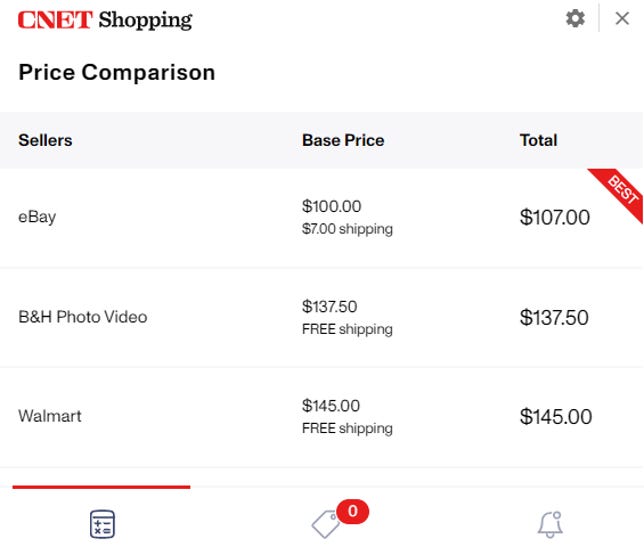
price-comparo.png
Screenshot by CNET

Price comparison: Once you've installed the extension, point you browser to a product page at any major online retailer -- Amazon, Target, Walmart and the like -- and CNET Shopping will instantly search the web for better offers. While it's not foolproof, it generally provides an excellent snapshot of competing prices among the web's top stores. You'll know right away whether you're getting the best price, or be able to jump to a more affordable competitor. 

Coupon finder: Did you know you may be losing out on free discounts when you buy online? With CNET Shopping installed, you'll immediately be made aware of the relevant coupon codes available on the site where you're shopping -- including a checkout scan to verify any possible final deals. 

Price tracking: Looking to buy something, but waiting for it to go on sale? With CNET Shopping's price tracker, you can do just that. On some products at supported retailers, you'll see an "Add Price Alert" button (as shown below) that will add that product to your personal tracking list. If and when it hits a discount percentage you specify, you'll be notified so you can pounce on the sale. 

Article belongs to CNET.com

March
1

Nutritional Value of Different Types of Avocados

March
1

California home sales inch up in January for second straight month
as prices moderate further, C.A.R. reports

  • Existing, single-family home sales totaled 241,520 in January on a seasonally adjusted annualized rate, up 0.4 percent from December and down 45.7 percent from January 2022.

  • January's statewide median home price was $751,330, down 3.0% percent from December and down 1.9% percent from January 2022.

  • Year-to-date statewide home sales were down 45.7 percent in January.

LOS ANGELES (Feb. 16) – California home sales edged up in January for the second straight month, as interest rates continued to take a breather, but still remained below the 250,000-unit sales pace for the third straight month, theCALIFORNIA ASSOCIATION OF REALTORS® (C.A.R.) said today.

Infographic: https://www.car.org/Global/Infographics/2023-01-Sales-and-Price

Closed escrow sales of existing, single-family detached homes in California totaled a seasonally adjusted annualized rate of 241,520 in January, according to information collected by C.A.R. from more than 90 local REALTOR® associations and MLSs statewide. The statewide annualized sales figure represents what would be the total number of homes sold during 2023 if sales maintained the January pace throughout the year. It is adjusted to account for seasonal factors that typically influence home sales. January's sales pace was up 0.4 percent on a monthly basis from a revised 240,630 in December and down 45.7 percent from a year ago, when a revised 444,400 homes were sold on an annualized basis.

"Thanks to slightly waning interest rates and tempering home prices, California's housing market kicked off the new year with another step up and continued to improve in January as buyers gained more confidence in purchasing a home and the affordability outlook improving slightly," said C.A.R. President Jennifer Branchini, a Bay Area REALTOR®. "While the monthly sales gains have been nominal over the past two months, the market is moving in the right direction, and more gradual improvements could be coming in the months ahead as the market moves into the spring homebuying season in a few weeks." 

California's median home price receded in January to $751,330, down 3.0 percent from the $774,850 recorded in December, which was the fifth straight monthly decline. January's price also was lower on a year-over-year basis for the third consecutive month, declining 1.9 percent from the $766,250 recorded last January.

"Job layoffs in recent months, primarily in the tech sector, have contributed to a decline in both sales and prices in higher-priced housing markets, particularly in the San Francisco Bay Area," said C.A.R. Vice President and Chief Economist Jordan Levine. "With home prices expected to remain soft and the mix of sales continuing to shift toward less expensive housing units throughout the rest of 2023, the market will see more downward price adjustments in the next few months." 

Other key points from C.A.R.'s January 2023 resale housing report include:

  • At the regional level, all major regions recorded year-over-year sales drops of more than one-third. The Central Valley dropped the most of all regions at -43.3 percent as eight of the 12 counties in the region registered sales drops of more than 40 percent year-over-year in January. Southern California (-41.1 percent) was another region in the state with a drop of over 40 percent, followed by the Far North (-39.6 percent), the San Francisco Bay Area (-36.9 percent), and the Central Coast (-35.1 percent).

  • All counties tracked by C.A.R. experienced a year-over-year sales drop in January, with 45 counties plummeting more than 30 percent and 11 counties falling more than 50 percent from a year ago. Siskiyou (-73.8 percent) had the largest sales drop, followed by Mono (-73.3 percent) and Yuba (-63.6 percent). Only two counties ― Glenn (-14.3 percent) and Kings (-19.7 percent) ― out of 51 counties monitored by C.A.R. had a sales decline of less than 20 percent in January from the same month of last year.


  • At the regional level, median home prices dropped from a year ago in all major regions, with the San Francisco Bay Area declining the most and by double-digits year-over-year. With prices sliding more than 10 percent in six Bay Area counties, the Bay Area's regional median price was down 14.6 percent from a year ago and the dip in January was the largest price decline since July 2009. Median prices in the state's other regions experienced more moderate declines, with the Central Valley's median price decreasing 6.6 percent, followed by the Far North (-3.4 percent), the Central Coast (-2.6 percent) and Southern California (-0.2 percent).


  • More than four out of five counties experienced a decline in their home price from a year ago in January, with 15 counties posting drops of more than 10 percent year-over-year. Plumas (-23.9 percent) had the sharpest decline of all counties, followed by Mendocino (-23.5 percent), and Del Norte (-19.5 percent). Nine counties recorded an increase in their median prices from a year ago, with four counties growing by double-digits. Siskiyou had the biggest price gain of all counties, increasing 30.8 percent from January 2022, followed by Mono (18.5 percent) and Glenn (18.0 percent).


  • Housing inventory in California continued to rise in January to reach the highest level in 32 months. The statewide unsold inventory index (UII) was double the level of 1.8 months recorded in the same month of last year, surging to 3.6 months in January 2023, a level last seen in May 2020, when the state underwent a pandemic lockdown. Unsold inventory increased from a year ago by 88 percent or more in all price ranges, with the $500,000-$749,000 price range gaining the most (112.5 percent), followed by the $1 million-and-up price tier (105.0 percent), the $750,000-$999,000 (100.0 percent) and the sub-$500,000 (88.9 percent).


  • Weak housing demand continued to create carryover and elevate inventory on the surface, as 48 of the 51 counties tracked by C.A.R. registered an increase in active listings from January 2022. Five counties recorded a triple-digit, year-over-year gain in January as compared to 13 counties in December. Solano recorded the largest yearly growth of 163.6 percent, followed by Yuba (163.5 percent), Solano (119.9 percent), Amador (111.1 percent) and Placer (110.7 percent). Active listings decreased from a year ago in three counties, with Mono (-27.3 percent) dipping the most year-over-year, followed by Del Norte (-23.1 percent) and Plumas (-8.4 percent).


  • The median number of days it took to sell a California single-family home was 33 days in January and 12 days in January 2022.

  • C.A.R.'s statewide sales-price-to-list-price ratio* was 96.5 percent in January 2023 and 101.2 percent in January 2022.

  • The statewide average price per square foot** for an existing single-family home was $371, down from $372 in January a year ago.

  • The 30-year, fixed-mortgage interest rate averaged 6.27 percent in January, up from 3.45 percent in January 2022, according to Freddie Mac.

Note:  The County MLS median price and sales data in the tables are generated from a survey of more than 90 associations of REALTORS® throughout the state and represent statistics of existing single-family detached homes only. County sales data is not adjusted to account for seasonal factors that can influence home sales. Movements in sales prices should not be interpreted as changes in the cost of a standard home. The median price is where half sold for more and half sold for less; medians are more typical than average prices, which are skewed by a relatively small share of transactions at either the lower end or the upper end. Median prices can be influenced by changes in cost, as well as changes in the characteristics and the size of homes sold. The change in median prices should not be construed as actual price changes in specific homes.

*Sales-to-list-price ratio is an indicator that reflects the negotiation power of home buyers and home sellers under current market conditions. The ratio is calculated by dividing the final sales price of a property by its last list price and is expressed as a percentage. A sales-to-list ratio with 100 percent or above suggests that the property sold for more than the list price, and a ratio below 100 percent indicates that the price sold below the asking price.

**Price per square foot is a measure commonly used by real estate agents and brokers to determine how much a square foot of space a buyer will pay for a property. It is calculated as the sale price of the home divided by the number of finished square feet. C.A.R. currently tracks price-per-square foot statistics for 50 counties.

Leading the way…® in California real estate for more than 110 years, the CALIFORNIA ASSOCIATION OF REALTORS® (www.car.org) is one of the largest state trade organizations in the United States with more than 217,000 members dedicated to the advancement of professionalism in real estate. C.A.R. is headquartered in Los Angeles.

# # #

January 2023 County Sales and Price Activity
(Regional and condo sales data not seasonally adjusted)

January 2023

Median Sold Price of Existing Single-Family Homes

Sales

State/Region/County

Jan.

2023

Dec.

2022


Jan.

2022


Price MTM% Chg.

Price YTY% Chg.

Sales MTM% Chg.

Sales YTY% Chg.

Calif. Single-family home

$751,330

$774,850

r

$766,250

r

-3.0%

-1.9%

0.4%

-45.7%

Calif. Condo/Townhome

$580,000

$590,000


$600,000


-1.7%

-3.3%

-19.2%

-43.1%

Los Angeles Metro Area

$700,000

$716,500


$700,000


-2.3%

0.0%

-19.8%

-42.4%

Central Coast

$894,500

$869,860


$920,400


2.8%

-2.8%

-19.0%

-35.1%

Central Valley

$425,000

$430,000


$455,000


-1.2%

-6.6%

-30.8%

-43.3%

Far North

$367,000

$350,000


$380,000


4.9%

-3.4%

-18.4%

-39.6%

Inland Empire

$540,000

$535,000


$539,000


0.9%

0.2%

-15.4%

-49.1%

San Francisco Bay Area

$1,000,000

$1,075,000

r

$1,171,000

r

-7.0%

-14.6%

-38.1%

-36.9%

Southern California

$738,250

$743,180


$740,000


-0.7%

-0.2%

-19.4%

-41.1%


San Francisco Bay Area


Alameda

$1,065,000

$1,065,500


$1,250,000


0.0%

-14.8%

-35.5%

-32.8%

Contra Costa

$736,500

$777,500


$829,000


-5.3%

-11.2%

-41.5%

-43.6%

Marin

$1,201,000

$1,500,000


$1,466,500

r

-19.9%

-18.1%

-63.0%

-52.6%

Napa

$790,000

$824,000

r

$862,500

r

-4.1%

-8.4%

-46.8%

-41.1%

San Francisco

$1,385,000

$1,564,000


$1,630,000


-11.4%

-15.0%

-34.7%

-22.8%

San Mateo

$1,625,000

$1,675,000


$2,000,000


-3.0%

-18.8%

-36.8%

-31.0%

Santa Clara

$1,530,000

$1,478,000


$1,716,000


3.5%

-10.8%

-35.4%

-39.9%

Solano

$580,000

$580,000

r

$583,500

r

0.0%

-0.6%

-35.2%

-31.3%

Sonoma

$781,930

$785,000

r

$799,000

r

-0.4%

-2.1%

-34.8%

-35.9%

Southern California


Los Angeles

$778,540

$799,670


$800,960


-2.6%

-2.8%

-22.0%

-38.2%

Orange

$1,194,500

$1,131,760


$1,195,000


5.5%

0.0%

-20.5%

-35.6%

Riverside

$585,000

$575,000


$590,000


1.7%

-0.8%

-11.7%

-46.5%

San Bernardino

$446,900

$466,940


$450,000


-4.3%

-0.7%

-21.7%

-53.6%

San Diego

$824,950

$850,000


$875,000


-2.9%

-5.7%

-17.9%

-35.1%

Ventura

$815,000

$818,000


$850,000


-0.4%

-4.1%

-28.8%

-40.4%

Central Coast


Monterey

$850,000

$775,000


$875,000


9.7%

-2.9%

-12.6%

-38.2%

San Luis Obispo

$795,750

$830,000


$851,500


-4.1%

-6.5%

-30.4%

-35.6%

Santa Barbara

$890,000

$1,055,000


$912,500


-15.6%

-2.5%

-7.3%

-35.6%

Santa Cruz

$1,170,000

$1,175,000


$1,257,500


-0.4%

-7.0%

-26.5%

-27.4%

Central Valley


Fresno

$375,000

$396,000


$395,000


-5.3%

-5.1%

-29.7%

-37.4%

Glenn

$392,500

$286,750


$332,500


36.9%

18.0%

50.0%

-14.3%

Kern

$357,500

$365,000


$367,000


-2.1%

-2.6%

-24.0%

-35.1%

Kings

$365,000

$337,000


$322,500


8.3%

13.2%

-8.6%

-19.7%

Madera

$387,460

$410,500


$394,000


-5.6%

-1.7%

-31.6%

-40.2%

Merced

$369,000

$340,000


$387,380


8.5%

-4.7%

-47.5%

-58.0%

Placer

$625,000

$622,500


$670,000


0.4%

-6.7%

-30.2%

-40.9%

Sacramento

$498,000

$485,000


$524,000


2.7%

-5.0%

-32.1%

-45.7%

San Benito

$719,000

$765,000


$842,500


-6.0%

-14.7%

-50.0%

-50.0%

San Joaquin

$478,500

$465,000


$499,950


2.9%

-4.3%

-33.1%

-49.5%

Stanislaus

$403,750

$420,000


$450,000


-3.9%

-10.3%

-36.5%

-54.3%

Tulare

$332,720

$353,500


$333,000


-5.9%

-0.1%

-29.4%

-40.2%

Far North


Butte

$410,000

$408,500


$456,000


0.4%

-10.1%

-1.4%

-30.6%

Lassen

$260,000

$170,000


$259,000


52.9%

0.4%

-30.8%

-60.9%

Plumas

$350,000

$395,000


$460,000


-11.4%

-23.9%

-52.2%

-59.3%

Shasta

$373,750

$348,500


$375,000


7.2%

-0.3%

-15.9%

-32.7%

Siskiyou

$385,860

$295,000


$296,000


30.8%

30.4%

-52.2%

-73.8%

Tehama

$314,900

$285,600


$359,000


10.3%

-12.3%

-13.8%

-35.9%

Other Calif. Counties


Amador

$422,500

$415,000


$400,000


1.8%

5.6%

-23.5%

-33.3%

Calaveras

$455,000

$449,500


$467,500


1.2%

-2.7%

-26.8%

-48.8%

Del Norte

$300,000

$331,250


$372,500


-9.4%

-19.5%

-30.0%

-56.3%

El Dorado

$567,500

$591,000


$607,500


-4.0%

-6.6%

-34.7%

-52.5%

Humboldt

$395,000

$392,500


$425,000


0.6%

-7.1%

-40.0%

-39.3%

Lake

$310,000

$370,000


$349,900


-16.2%

-11.4%

-18.9%

-33.8%

Mariposa

$372,500

$359,000


$350,000


3.8%

6.4%

-20.0%

-25.0%

Mendocino

$389,000

$599,000

r

$508,500


-35.1%

-23.5%

-12.9%

-32.5%

Mono

$1,125,500

$765,000


$950,000


47.1%

18.5%

-42.9%

-73.3%

Nevada

$470,000

$520,000


$550,000


-9.6%

-14.5%

-29.6%

-47.7%

Sutter

$392,000

$383,500


$415,000


2.2%

-5.5%

0.0%

-41.7%

Tuolumne

$388,000

$380,000


$386,750


2.1%

0.3%

-35.1%

-33.9%

Yolo

$522,500

$600,000


$542,500


-12.9%

-3.7%

6.4%

-28.6%

Yuba

$425,000

$420,000


$402,500


1.2%

5.6%

-50.8%

-63.6%

r = revised


January 2023 County Unsold Inventory and Days on Market
(Regional and condo sales data not seasonally adjusted)

January 2023

Unsold Inventory Index

Median Time on Market

State/Region/County

Jan.

2023

Dec.

2022


Jan.

2022


Jan.

2023

Dec.

2022


Jan.

2022


Calif. Single-family home

3.6

2.7


1.8


33.0

28.0


12.0


Calif. Condo/Townhome

3.5

2.6


1.8


32.0

28.0


11.0


Los Angeles Metro Area

3.8

3.1


1.9


34.0

28.0


13.0


Central Coast

3.5

2.7


2.1


30.0

27.5


11.0


Central Valley

3.7

2.6


1.7


32.0

27.0


10.0


Far North

5.0

4.3


2.7


49.0

48.0


27.0


Inland Empire

4.4

3.7


1.9


40.0

35.5


16.0


San Francisco Bay Area

2.8

1.6


1.5

r

32.0

28.0


12.0


Southern California

3.6

2.9


1.8


32.0

27.0


12.0


San Francisco Bay Area


Alameda

2.2

1.4


1.5


26.0

19.0


10.0


Contra Costa

2.8

1.5


1.4


27.0

28.0


9.0


Marin

4.5

1.4


1.4


72.0

34.0

r

30.0

r

Napa

5.9

2.8


3.2

r

84.0

57.0


47.5


San Francisco

2.9

1.5


2.0


34.0

26.0


13.0


San Mateo

2.4

1.4


1.6


22.0

22.5


10.0


Santa Clara

2.5

1.3


1.6


22.5

17.5


7.0


Solano

2.9

2.0

r

1.0

r

58.0

50.0

r

30.0

r

Sonoma

3.3

2.2


1.7

r

43.5

44.0

r

40.0

r

Southern California


Los Angeles

3.7

3.1


2.0


31.0

25.5


13.0


Orange

3.1

2.4


1.6


30.0

23.0


8.0


Riverside

4.3

3.7


1.8


39.0

36.0


16.0


San Bernardino

4.7

3.8


2.1


42.0

34.0


16.0


San Diego

2.7

2.2


1.5


26.0

20.0


9.0


Ventura

3.5

2.3


2.0


39.0

39.0


20.0


Central Coast


Monterey

3.9

3.2


2.1


33.0

36.0


10.0


San Luis Obispo

4.3

2.8


2.3


32.0

21.0


9.0


Santa Barbara

2.6

2.3


1.9


18.5

29.0


12.0


Santa Cruz

3.3

2.5


2.0


35.0

24.0


13.5


Central Valley


Fresno

4.2

2.9


1.9


29.0

26.5


9.0


Glenn

2.9

4.0


3.0


31.0

19.0


7.5


Kern

3.1

2.4


1.7


32.5

24.5


9.0


Kings

3.5

3.2


2.1


53.0

22.5


10.0


Madera

7.2

4.6


3.1


37.0

32.0


17.0


Merced

4.4

2.4


1.5


40.5

30.0


14.5


Placer

4.1

2.9


1.6


36.0

33.0


9.0


Sacramento

2.9

2.1


1.4


28.0

26.0


8.0


San Benito

5.6

2.3


2.2


27.5

44.5


12.0


San Joaquin

3.7

2.7


1.6


40.0

29.0


12.5


Stanislaus

3.6

2.4


1.4


24.0

23.0


10.0


Tulare

3.8

2.6


1.9


34.5

31.0


11.0


Far North


Butte

3.9

4.2


2.4


42.5

44.0


14.5


Lassen

10.9

7.3


3.6


128.0

94.0


80.0


Plumas

6.9

3.4


3.1


142.0

134.0


127.0


Shasta

4.2

3.8


2.5


41.5

33.5


19.0


Siskiyou

13.2

6.0


3.5


108.0

32.0


39.0


Tehama

5.8

5.1


2.9


66.0

72.0


49.0


Other Calif. Counties


Amador

5.5

4.4


2.3


55.0

43.0


33.0


Calaveras

4.4

3.4


2.1


81.0

77.0


73.0


Del Norte

10.1

6.5


4.2


116.0

91.0


70.0


El Dorado

4.4

3.0


2.0


46.5

43.5


33.0


Humboldt

6.8

4.1


3.0


24.0

17.0


10.0


Lake

6.4

5.2


4.2


56.0

71.0


39.0


Mariposa

5.4

4.9


4.3


57.5

20.5


62.0


Mendocino

8.4

7.7

r

5.0

r

131.0

60.0


52.5


Mono

6.3

4.0


2.5


160.5

129.0


90.0


Nevada

3.9

3.0


2.3


42.0

37.0


30.0


Sutter

2.8

3.2


1.2


38.0

43.0


8.0


Tuolumne

5.2

3.9


3.4


88.0

65.0


39.5


Yolo

3.2

3.4


1.8


43.5

26.0


10.0


Yuba

6.4

2.8


1.5


36.5

41.0


11.0


r = revised

ARTICLE BELONGS TO CAR.ORG

Login to My Homefinder

Pixel