
 RSS Feed
Home sales have plummeted in California over the past few years and are now down 37 percent from their pandemic peak, according to data from real estate analytics platform Reventure App.
Real estate analyst Nick Gerli, Reventure's CEO and founder, said that this plunge in sales indicates "a massive homebuyer strike underway in California right now" which is likely the result of how expensive the Golden State market has gotten over the past five years.
Falling Sales and Rising Inventory
While the California housing market remains competitive—with homes for sale spending an average 31 days on the market before going under contract, less than the nationwide median of 38—and home prices are still rising, buyers in the state are clearly withdrawing.
According to the latest Redfin data, home sales in California totaled 24,895 in May, down 7.9 percent from a year earlier. An analysis of historical data by Reventure found that this number was about 25 percent lower than the state's long-term average—the typical or expected number of sales over an extended period of time.
It was also significantly lower than the pandemic peak reached in June 2021, when the Golden State closed 43,471 sales. According to the California Association of Realtors, it was actually the biggest yearly decline in sales in 17 months.

This drop in sales might have something to do with the fact that the median sale price of a home in California remains much higher than that of a typical home in the U.S. In May, the median sale price of a home in the state was $859,700, up 0.02 percent year-over-year; in the U.S., it was $440,910, up 0.6 percent from a year earlier.
Not only are homes expensive, but mortgage rates remain high—as of July 3, the average 30-year fixed-rate mortgage was 6.67 percent—and other costs—including home insurance, homeowners association (HOA) fees and repairs—are also going up, making buyers think twice about whether they can afford owning a home.
"Buyers are waiting for the costs of homeownership to come down. That could mean lower mortgage rates or lower home prices," Oscar Wei, deputy chief economist at the California Association of REALTORS® (CAR), told Newsweek. "Buyers could also be waiting for some clarity on the market direction, as consumers remain concerned about how tariffs and the ongoing trade tensions could affect the economy and their personal finances."
What Gerli describes as a "homebuyer strike" is starting to push up inventory in the state, where the supply of available homes is low and has been kept down by California's strict red-tape policies. According to Redfin, there were 112,485 homes for sale in the Golden State in May, up 18.7 percent from a year earlier. Of these, 38,160 were newly listed homes.
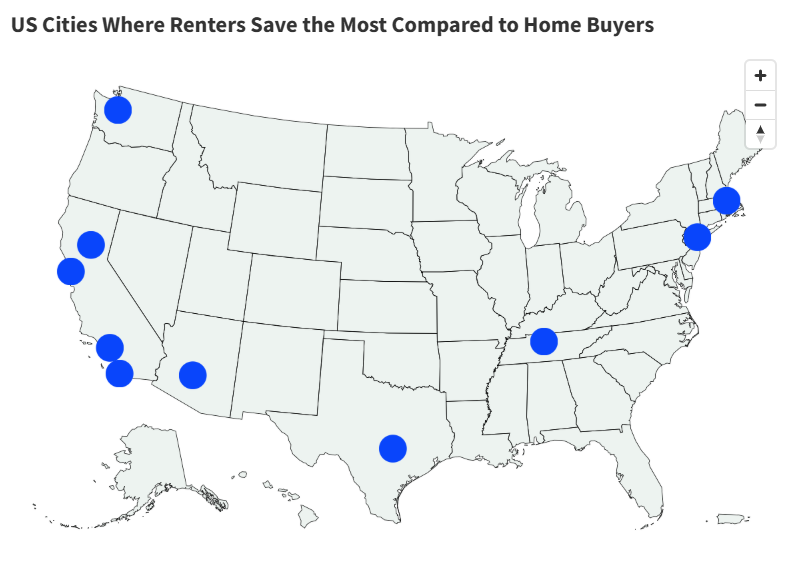
According to Realtor.com's data, active listings in the state totaled 76,737 in June. "This is the second-highest inventory level for June going back almost 10 years. So inventory is now rising, which is putting downward pressure on prices," Gerli told Newsweek. "The question is: will inventory continue to rise? If it does, I think the potential is there for California to experience a 15 percent housing correction."
On the state level, only 40.4 percent of homes sold above list price in May, 9.53 percentage points less than a year earlier. On the other hand, 28.6 percent of home listings had price drops, up 4.4 percentage points from May 2024.
"The increase in supply could alleviate some upward pressure on prices and make homeownership easier for those who are considering buying now," Wei said.
A Market To Keep an Eye On
While prices are not rising as much as they have in the past few years, they are far from dropping at the state level in California. According to Gerli, the state's housing market "will likely continue to struggle until affordability improves."
Currently, he said, the median household in the state needs to spend over 62 percent of their gross income to afford mortgage and tax payments on a home purchase—which is an untenable proposition for many.
"That's the most expensive of any conventional U.S. state, and ultimately, a payment ratio that puts owning a home out of reach for the vast majority of California renter households," Gerli said.
But the dynamics unfolding in California should be watched closely, Gerli said, as any downturn in the state could have "big implications for the U.S. market more broadly," especially if California's housing market heads toward anything like a recession.
The performance of the state's housing market has historically had a direct impact on California's neighbors—including Idaho, Utah, Arizona, Nevada and Washington—where Californians have sought cheaper housing when their own state offered little options.
"California's high housing costs result in some would-be buyers electing to move to more affordable nearby states like Arizona, Nevada, and Idaho to buy a house," Gerli told Newsweek. "As a result, if home values were to drop in California, it could mean fewer people electing to leave the state—and less homebuyer demand in the surrounding states."
Article belons to newsweek.com