








Posts from December 2022

Sunshine Properties Blog

Subscribe and receive email notifications of new blog posts.


rss logo RSS Feed
Uncategorized | 818 Posts
December
29

BEST OF

Best Personal Loans of January 2023

Compare the best personal loans for good and bad credit, debt consolidation, home improvement and more.

Many or all of the products featured here are from our partners who compensate us. This may influence which products we write about and where and how the product appears on a page. However, this does not influence our evaluations. Our opinions are our own. Here is a list of our partners and here's how we make money.

SHOW MORE

Best Personal Loans From Our Partners

Our pick for

Personal loans for credit card consolidation

Happy Money
GET RATE

on Happy Money's website

Happy Money

4.5

NerdWallet rating 

Est. APR

7.99-29.99%

Loan amount

$5,000-$40,000

Min. credit score

640

View details 


Our pick for

Personal loans for good to excellent credit

SoFi
GET RATE

on SoFi's website

SoFi

5.0

NerdWallet rating 

Est. APR

7.99-23.43%

Loan amount

$5,000-$100,000

Min. credit score

None

View details 


Our pick for

Home improvement loans

Lightstream
GET RATE

on LightStream's website

LightStream

5.0

NerdWallet rating 

Est. APR

6.99-23.99%

Loan amount

$5,000-$100,000

Min. credit score

660

View details 


Our pick for

Personal loans for short credit history

Upstart
GET RATE

on Upstart's website

Upstart

4.5

NerdWallet rating 

Est. APR

5.42-35.99%

Loan amount

$1,000-$50,000

Min. credit score

None

View details 


Our pick for

Personal loans for fair credit

Upgrade
GET RATE

on Upgrade's website

Upgrade

5.0

NerdWallet rating 

Est. APR

7.96-35.97%

Loan amount

$1,000-$50,000

Min. credit score

560

View details 


Our pick for

Secured personal loans

BestEgg
GET RATE

on Best Egg's website

Best Egg

4.5

NerdWallet rating 

Est. APR

8.99-35.99%

Loan amount

$2,000-$50,000

Min. credit score

600

View details 


Our pick for

Bank loans

Marcus by Goldman Sachs
GET RATE

on Goldman Sachs' website

Marcus by Goldman Sachs

5.0

NerdWallet rating 

Est. APR

6.99-24.99%

Loan amount

$3,500-$40,000

Min. credit score

740

View details 


Our pick for

Personal loans for bad credit

Universal Credit
GET RATE

on Universal Credit's website

Universal Credit

4.5

NerdWallet rating 

Est. APR

11.69-35.93%

Loan amount

$1,000-$50,000

Min. credit score

560

View details 


Our pick for

Debt consolidation loans

Discover
GET RATE

on Discover's website

Discover® Personal Loans

5.0

NerdWallet rating 

Est. APR

6.99-24.99%

Loan amount

$2,500-$35,000

Min. credit score

660

View details 


What is a personal loan?

A personal loan is money borrowed from a bank, credit union or online lender that you repay in equal monthly installments, usually over two to seven years.

Personal loans are typically unsecured, which means they don't require collateral. Lenders instead consider your credit profile, income and debts during the loan approval process. If you fail to repay the loan, your credit can take a hit.

When should I get a personal loan?

A NerdWallet survey published in October 2022 revealed that nearly one-quarter of Americans (24%) took out a personal loan within the past 12 months, borrowing on average $5,046.

Personal loan funds can be used for almost any purpose, but taking a loan makes the most sense when:

  • It's the least expensive form of financing.

  • It's used for something with the potential to increase your financial standing, like debt consolidation or home improvements.

  • You can manage the monthly payments without stressing your budget.

In contrast, a personal loan used for events like a wedding, or discretionary expenses like a vacation, can be expensive. NerdWallet recommends using savings for nonessentials to avoid finance charges.

If you're borrowing for emergency or medical expenses, consider less-expensive alternatives first, such as community assistance or payment plans.

Personal loan interest rates and fees

Personal loan interest rates vary by lender, and the rate you receive depends on factors like your credit score, income and debt-to-income ratio.

Borrowers with high credit scores generally receive lower rates, from about 11% to 15%, while those with low credit scores may get an APR around 25%. Here's what interest rates on personal loans look like, on average:

How's your credit?

Score range

Estimated APR

Excellent

720-850.

10.6%.

Good

690-719.

15.7%.

Fair

630-689.

19.4%.

Bad

300-629.

25.2%.

Source: Average rates are based on aggregate, anonymized offer data from users who pre-qualified in NerdWallet's lender marketplace from March 1, 2022, to Aug. 31, 2022. Rates are estimates only and not specific to any lender. The lowest credit scores — usually below a 500 credit score — are unlikely to qualify. Information in this table applies only to lenders with APRs below 36%.

Some lenders charge origination fees to cover the cost of processing the loan. Lenders deduct the fee from the loan proceeds or roll it into the balance. This one-time, upfront fee is included in the loan's annual percentage rate, so consider this when comparing costs between lenders.

Other fees to watch out for include late fees, insufficient funds fees and prepayment fees, which are penalties for paying off your loan early.

Best place to get a personal loan

You can get a personal loan from online lenders, banks and credit unions. The best option depends on where you can get the rate, terms and features that fit your financial situation.

For example, if a fast and convenient loan application is important to you, then consider an online lender. On the other hand, if lower rates and in-person support matter, then a bank loan or credit union loan could be the better option.

Pros and cons of personal loans

Depending on your financial situation and the loan's purpose, a personal loan can be the right move or one you should sidestep.

Pros

Lower starting APRs than credit cards. For consumers with strong credit, personal loans typically have lower APRs than credit cards. While some credit cards offer 0% interest during an introductory period, the rates are generally higher after the period ends.

Fixed rates and monthly payments. Personal loans have fixed rates and monthly payments over a set term, so you always know what you owe and for how long. Other financing options like home equity lines of credit have variable rates that can mean fluctuating monthly payments.

Flexible loan amounts. Depending on the lender and your creditworthiness, you may have access to personal loan amounts of $1,000 to $100,000. This range meets a wide variety of expenses, from small emergencies to large home improvement projects.

No collateral. Unlike home equity loans that require you to secure the loan with your house, unsecured personal loans don't require collateral. You risk damaging your credit if you can't repay, but you won't lose any assets.

Cons

Maximum APRs can be high. If you have a low credit score, APRs on personal loans can be higher than credit card APRs.

Possible fees. Borrowers may have to pay fees — like origination or late fees — along with their loan payments.

Increase in debt. Taking a personal loan adds debt to your budget, so it's important to factor in the additional obligation and feel comfortable about paying it off.

Summary of personal loan pros and cons

Pros

Cons

  • Lower starting APRs than credit cards.

  • Fixed rates and monthly payments.

  • Flexible loan amounts.

  • No collateral is needed.

  • Maximum APRs can be high.

  • Fees are possible, depending on the lender.

  • Increases the debt you owe.

How to choose the best personal loan

Here are things to consider as you shop around and compare personal loans.

Soft credit check. Most online lenders let you check your estimated interest rate by performing a soft check of your credit during pre-qualification. This won't affect your credit score, so it pays to take the steps to pre-qualify for a loan with multiple lenders and compare rates and loan features.

Annual percentage rates. Because APRs include interest rates and fees, they offer an apples-to-apples cost comparison for borrowers deciding between personal loan offers. Use our personal loan calculator to see estimated rates and payments based on credit scores.

Repayment terms. Having a wide variety of repayment term options gives you the option to get a shorter term and pay less interest or a longer term and have a low monthly payment. Based on your budget, one may make more financial sense than the other.

Loan amount. Depending on how much money you need, one lender could be more attractive than another. Some lenders offer small to midsize loan amounts, like $2,000 to $40,000, while others provide loans up to $100,000. Determining the amount you need ahead of time will help you compare and decide.

Special features. You may benefit from features like autopay rate discounts, unemployment protection or financial coaching. See if the lender you're considering offers any perks that could help you reach your financial goals.

ARTICLE BELONGS TO NERDWALLET.COM

December
29

How high did US inflation get this year and where is it headed in 2023?

Prices for everyday consumer goods continue to rise, even if inflation is showing signs of slowing down.
Prices for everyday consumer goods continue to rise, even if inflation is showing signs of slowing down. Photograph: Spencer Platt/Getty Images

Inflation soared in 2022 amid Covid-19, the war in Ukraine and a broken supply chain – but here's what we can expect next

Just a few years ago, inflation seemed like an issue the US and many other major western economies had outgrown. "Is inflation dead?" Businessweek asked in 2019, beneath an image of an ailing dinosaur. And then came Covid-19.

Supply chain issues, sickness, death and the war in Ukraine upended global trade. Propped up by government handouts and savings, consumers bounced back from the pandemic shutdowns only to find a short supply of everything from used cars to housing was triggering a cost of living crisis unseen in a generation. US inflation this year reached a 40-year high.

Now there are some signs that the price increases will slow in the coming year. But the overall picture is complicated. Here's some of what we know about inflation this year and where it is heading.
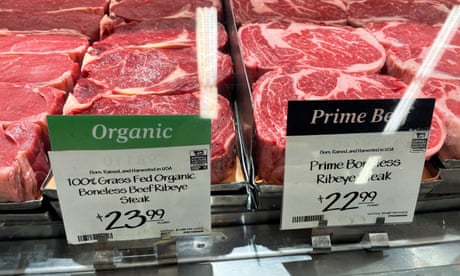
Rising inflation affects consumer prices in Los Angeles, California on 13 June 2022.
US cost of living continues to rise but inflation appears to finally be slowing
Read more

How high did inflation get this year?

Inflation hit highs this year unseen since the 1970s. Inflation started at 7.5% in January and eventually climbed up to 9.1% in June, when gas prices were hitting $5 (£4) a gallon in some states. The inflation rate for gas prices alone was 60% at a time, largely because of repercussions from Russia's invasion of Ukraine.

Rising oil prices and lingering Covid-19 supply chain issues kept food prices elevated. A shortage on semiconductor chips continued into the first half of 2022, keeping new and used car prices high.

Even when inflation started coming down from its peak in June, core inflation, which is the price of all goods and services except for the volatile energy and food markets, went up in September to 6.6%, showing just how widespread inflation was.

The last few months have finally seen inflation coming down, at rates lower than economists had expected. In November, inflation was at 7.1%, the lowest rate this year.

Did economists expect inflation to get this high?

Not exactly. Many economists, including those at the Federal Reserve, believed that inflation would be "transitory", or temporary, and would ease in 2022 as supply chain issues got resolved and people slowed their spending. It was the message that both Joe Biden and Fed chair Jerome Powell were touting at the end of 2021.

Instead, the supply chain issues continued, particularly because the Omicron variant emerged and proved difficult to control. Then Russia invaded Ukraine at the end of February, causing massive disruption to global supply chains, particularly in the energy market. And even amid continued rising prices, US consumers continued to spend, showing that pent-up pandemic demand was larger than expected.

What has the Federal Reserve done to address inflation?

The main tool the Federal Reserve has to address inflation is to adjust interest rates, which is meant to temper spending by making borrowing money more expensive.

Starting in March, the Fed started hiking up interest rates at a pretty aggressive rate. In December, the Fed raised interest rates for the seventh time this year, bringing interest rates from 4.25% to 4.5%.

Economists say the raised interest rates have only played a small role so far in getting the inflation rate down. So far, the raised interest rates have been mostly felt in the housing market, since rates directly impact mortgages. Home sales have been falling since February.

High inflation in the US curbed Black Friday sales in 2022.
Fed eases pace of interest rate rises after signs inflation may be slowing
Read more

"It mostly takes time. It certainly played a little bit of a role, but the bulk of the Fed's tightening I don't think is going to be felt until next year, or even to some extent 2024," said Michael Pugliese, an economist at Wells Fargo.

Will inflation continue to come down in 2023?

Fed chair Jerome Powell is taking a pessimistic view on inflation in the coming year.

"We've continually expected to make faster progress on inflation than we have, ultimately," Powell said on 14 December, after the Fed's latest interest rate hike. The Fed has indicated it is aiming to keep raising rates until it hits somewhere around 5% to 5.5%, signaling Fed officials' concern that inflation will prove to be stubborn.

But compared to where things were last year, things appear to be in a better place, said Claudia Sahm, a former economist for the Fed and author of the "Stay-At-Home Macro" newsletter.

"The things that looked like they were getting better this time last year didn't get better, they got worse … This year, things are getting notably better, and the better is coming from five directions instead of one," Sahm said. "It feels like there's more cause to be optimistic."

Covid-19 appears to be more contained now than it was this time last year, when the Omicron variant started spreading. Supply chain issues are easing up, leading to, for example, new and used car prices dropping. The US has adjusted to the shock to the energy market caused by Russia's invasion of Ukraine.

With these in mind, Sahm is cautiously optimistic about inflation in the next year.

"We're not on the other side of this. It's going to be messy, it's going to be a wild ride, but everything is lining up for 2023," Sahm said. "Unless something else bad happens in the world, 2023 is a path back to something that's going to look normal."

What about unemployment in 2023?

The Fed has a dual mandate – keeping prices stable and maximizing employment. Right now it is focused on getting inflation back down to its target of 2% and the biggest victim of that policy is likely to be its second mandate – keeping people in work.

The US unemployment rate fell in November and many companies are still reporting having difficulty finding people to fill open positions.
The US unemployment rate fell in November and many companies are still reporting having difficulty finding people to fill open positions. Photograph: Justin Lane/EPA

So far the jobs market has shrugged off inflation and the Fed's rate hikes. While price pressures have been high, the unemployment rate – at 3.7% in November – is around the same rate that it was before the pandemic, which was a record low.

As the Fed continues to increase interest rates, unemployment will rise. The Fed is projecting unemployment will rise to 4.6% next year. Other estimates, like Wells Fargo, have the peak closer to 5.5%.

The Fed has not raised rates this aggressively in decades and as it takes time for those increases to work their way into the real economy, it is too early to predict how many people will lose their jobs. That will depend on how the economy responds to the Fed's continued interest rate hike.

"The Fed is overcompensating for getting burned last year" when they predicted inflation would be transitory," Sahm said. "If the Fed gets overly cautious … goes harder and further than they need to, we all pay for that."

The Fed raised interest rates again this month, albeit by a smaller percentage than its last four hikes. Still, critics charge the Fed has done too much, too soon. Senator Elizabeth Warren, who has been critical of Powell for aggressively hiking rates, tweeted that "his rate hikes risk throwing millions out of work".

"He should remember that people who'll lose their jobs aren't stockbrokers and CEOs, it's working people who need that paycheck every week."

The shadow of inflation may be waning but it looks set to hover darkly over the economy well into 2023.

We've hit our goal!
but you can still support us
$1,076,088
contributions

Lend us a hand in 2023

We have a small favour to ask. Tens of millions have placed their trust in the Guardian's fearless journalism since we started publishing 200 years ago, turning to us in moments of crisis, uncertainty, solidarity and hope. More than 1.5 million supporters, from 180 countries, now power us financially – keeping us open to all, and fiercely independent. We are so grateful to everyone who has helped us reach our $1m goal to support our reporting in 2023. But it's not too late to make a gift.

Unlike many others, the Guardian has no shareholders and no billionaire owner. Just the determination and passion to deliver high-impact global reporting, always free from commercial or political influence. Reporting like this is vital for democracy, for fairness and to demand better from the powerful.

And we provide all this for free, for everyone to read. We do this because we believe in information equality. Greater numbers of people can keep track of the events shaping our world, understand their impact on people and communities, and become inspired to take meaningful action. Millions can benefit from open access to quality, truthful news, regardless of their ability to pay for it. Make a gift to the Guardian from as little as $1 – it only takes a minute. If you can, please consider supporting us with a regular amount each month. Thank you.


Contribution frequency
Single
Monthly
Annual

Contribution amount
$7 per month
$13 per month
Other
Accepted payment methods: Visa, Mastercard, American Express and PayPal
December
29

CHICKEN ADOBO AND CALIFORNIA AVOCADO FRIED RICE TOPPED WITH PICKLED VEGETABLES

Click Here to Read More...

December
27

With these four immune-boosting foods, you can keep your immunity up without sacrificing nutrition. These foods form the core of my daily diet. This year, more than ever, I want to work with my immune system to keep my body at its peak performance no matter what. Staying healthy is more than just a lean, strong body ― it's about being ready for whatever is thrown your way! Stress affects our immune system. And, while I can't always change the stressors in my life, I love that I can eat to improve my immune response to outside pressure. As a nutritionist, you'll always find these "fab four" in my kitchen or pantry.

Apples: Apples contain a variety of phytochemicals including quercetin (13.2 mg/100 g fruit, on average), a compound that may protect against the flu virus. And studies have linked the consumption of apples to the reduced risk of some cancers, cardiovascular disease, asthma and diabetes. The best way to eat an apple is raw and with the skin. Because the skin contains a greater amount of nutrients than the flesh be sure to thoroughly wash the skin. If you cook apples, leave the skin on as the peel helps to hold onto more of the nutrients. I love this recipe for Kale Salad with California Avocado – apples pair wonderfully with kale's natural bitterness for a deliciously filling salad!

kale salad with california avocado

Avocados: I recommend California Avocados to my clients as they have the good fats that love you back! When you have a beautiful plate of greens, the healthy fats in avocados serve as a "nutrient booster" by helping increase the of absorption of fat-soluble nutrients like vitamins A, D, K and E. California Avocados contain 4% DV Vitamin C, an antioxidant that may contribute to healthy immune function. There are so many ways to add California Avocados to your day, any time of day ― like topping a salad, grain bowl, or veggie dish, or adding to a smoothie or smoothie bowl.

Just one serving ― one-third of a medium avocado (50 g) ― contains 6% of the daily value for Vitamin E. Vitamin E is an antioxidant, which the body needs to keep your immune system strong in the fight against bacteria and viruses.

I also have to add that one of the reasons I love California Avocados is because of the care that growers put into every single avocado. California Avocado growers put care into how their trees are nurtured, planted and harvested, and work to keep the land they grow on sustainable and fruitful for generations to come.

I recommend this heart-healthy superfood because the antioxidants, vitamins C and E, in avocados may help boost immunity. You can also pickle avocados, and they are quite delicious eaten this way. Or you could whip up a fruity avocado smoothie bowl with dark leafy greens. For me, I treat avocados as nature's plant-based butter. They add a creamy mouthfeel to virtually any dish I make. I even whip them into mashed potatoes in place of butter!

fruity avocado smoothie bowl
quick pickled california avocados

Beans: Polyphenol-rich common dry beans include navy beans, kidney beans, red beans, black beans, pinto beans and cranberry beans. A 2017 published research found that dry common beans play a significant function in human nutrition, especially as a source rich in proteins, carbohydrates, dietary fibers, vitamins, minerals, phytochemicals and other micronutrients, as well as low saturated fat content. Besides these nutrients, the polyphenols and other metabolites have antioxidant activities and protect against various diseases, including microbial infections . It matters little which kind of bean you choose, or even if you buy them canned, they still contain these potent disease-fighting compounds.

I recommend eating a cup of beans a day. It's easy to toss them on top of salads, grain bowls, or make a curry or chili.

My favorite way to eat beans is to blend them into a hummus or dip. Give me some crunchy veggies or warm pita and a cup of white bean hummus any day of the week! This recipe for California Avocado and White Bean Wrapis another delicious way to integrate beans into your diet!

white bean avocado wrap

Blueberries: The anthocyanins and polyphenols in blueberries are major functional ingredients.

Blueberry polyphenols have been shown to be beneficial to human health and have beneficial properties which contribute to enhanced immune function. These beneficial properties also include anticancer, anti-obesity, prevention of degenerative diseases, anti-inflammation, protective effect on vision and liver, prevention of heart disease, antidiabetes, prevention of cardiovascular diseases, and improved cognitive decline.

I love to top my steel-cut oatmeal or overnight oats with a cup of blueberries! They add color and a sweet burst of flavor. And I sometimes toss a cup in my morning smoothie, along with dark leafy greens, and a variety of yummy smoothie ingredients. But please don't limit the beautiful blueberry to breakfast! This California Avocado Red White and Blueberry Salsa makes it easy to enjoy blueberries all day long!

avocado blueberry salsa

Eating for immunity is not only great for your diet, it's also great for your overall health. I encourage you to find new ways to integrate apples, California Avocados, beans, and blueberries into your diet today!

Sophie Uliano

Board-certified Holistic nutritionist, Wellness Educator

New York Times best-selling author Sophie Uliano is a leading expert in the field of natural health and beauty, who takes a down-to-earth approach to beauty focusing on what's truly healthy. Her journey started nearly a decade ago – Sophie was raising her toddler daughter in urban sprawl of Los Angeles, a transplant from the idyllic English countryside. And something just didn't feel right. She saw smog everywhere she went, her skin was showing premature signs of aging, she worried about her daughter playing in the park because of the chemicals used to treat the grass. The evidence for change was all around her.

So, she sat down and began to read. And read. And read. And what she found terrified and inspired her. So, she wrote her first book, Gorgeously Green, which was featured by Julia Roberts on The Oprah Winfrey Show. This appearance was a wake-up call for America, and even in the hours after it aired, she knew she wasn't alone in her concerns.

Thus, was born Gorgeously Green and the thriving online community. SophieUliano.com has become a trusted resource and voice in the field of holistic wellness, bringing together a community of like-minded women and providing in-depth articles, reviews, beauty picks, recipes, and more covering the latest beauty trends. She has written three subsequent books, Do It Gorgeously, The Gorgeously Green Diet and most recently Gorgeous for Good.

Sophie is a registered dietitian nutritionist for the California Avocado Commission. Their content on the California Avocado Commission website and/or blog are part of their partnership with our organization.

READ ALL POSTS
ARTICLE BELONGS TO CALIFORNIA AVOCADO
December
27

Press Release

Economy Expected to End 2022 on Positive Note Ahead of Modest Recession in New Year

December 19, 2022
Following Significant Decline in 2022, Housing and Mortgage Markets Not Expected to Meaningfully Recover Until 2024

WASHINGTON, DC – Following an upward...

Click Here to Read More...

Older Posts ⇨

Login to My Homefinder

Pixel